Check out past editions of the newsletter by clicking here
Hey AI team! We’re back with a new edition of Five Minute AI this Tuesday ⏰
On today’s menu:
-
Runway and Adobe are transforming video creation with generative AI
-
Isaac, the robot butler, pushes the limits of home assistance
-
AI advances in robotic dexterity open up new possibilities
-
The “re-reading” technique boosts AI system performance
Ready? Let’s go...
DEFINITION OF THE DAY
Claude AI
Claude AI is a conversational artificial intelligence developed by Anthropic, built on an advanced language model. It’s designed for natural conversations, problem-solving, writing and analysis. Claude stands out for its grasp of context and its ability to provide detailed explanations on a wide range of topics.
The most advanced model, Sonnet 3.5, especially excels at programming and shows exceptional capabilities across several fields. It’s remarkably strong at multilingual translation, complex data analysis, and scientific research assistance. These capabilities make it a versatile tool at the cutting edge of artificial intelligence.
THE BIG STORY
🎬 Runway is revolutionizing video creation with AI
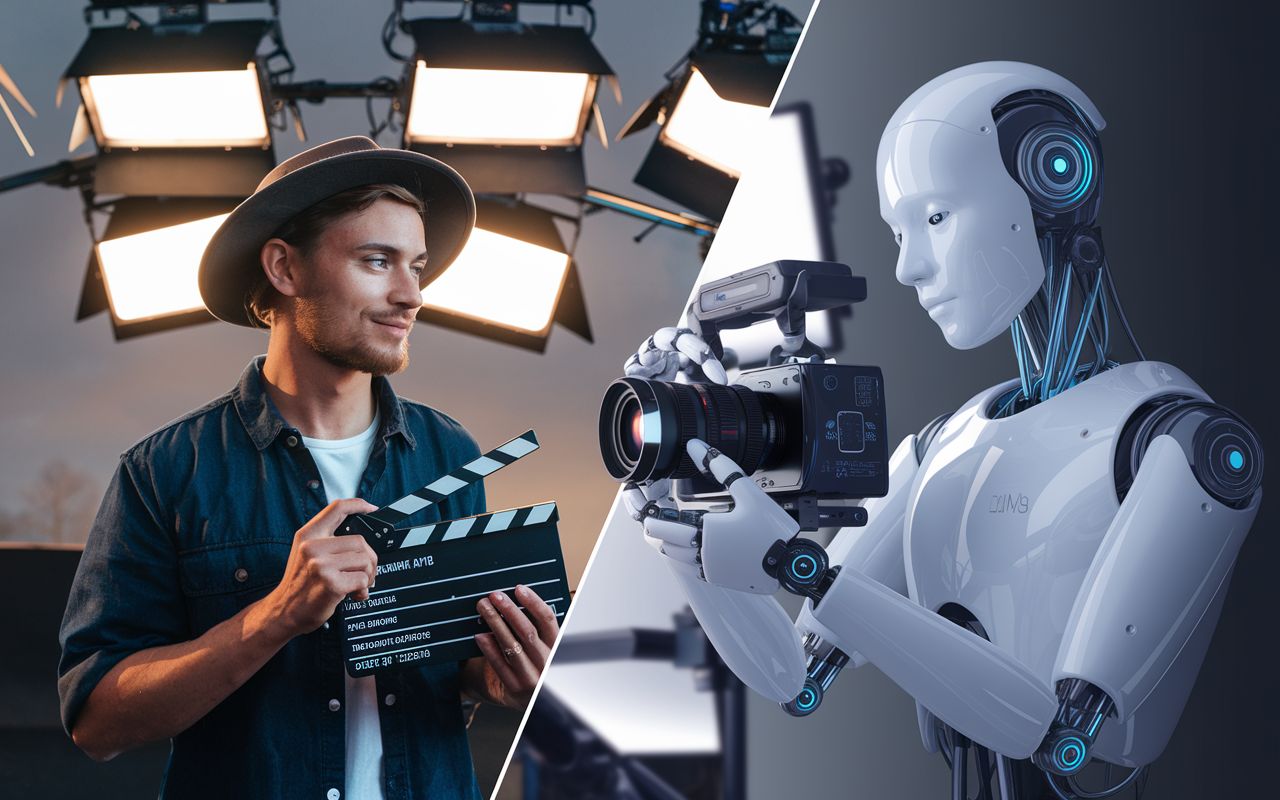
RunwayML, the AI-powered video creation platform, just hit a new milestone with the launch of its “Video to Video” feature. This technological leap lets you transform existing videos by applying new AI-generated visual styles to them.
Details:
-
Available to users with a paid subscription
-
Lets you change a video’s look and mood while keeping the original motion
-
Works with videos up to 10 seconds long at 720p resolution
-
Cost: 50 credits for 5 seconds or less, 100 credits beyond that
Why I’m telling you about this:
This technology opens up fascinating new creative possibilities. It lets creators reinvent their existing content or quickly explore different visual styles. It makes it super easy to change a scene’s setting, or the textures of just about anything. It lowers the barrier to quality renders that are normally reserved for professionals. That said, it also raises questions about the authenticity of images and intellectual property. In the digital age, it’s becoming crucial to sharpen our critical thinking about visual content, while exploring the creative potential these new tools offer.
🎬 Adobe is set to transform video with AI
Artificial intelligence keeps transforming the world of visual creation. Adobe, the creative software giant, just unveiled its new Firefly AI Video model, a promising tool that could be a game changer for the video industry.
Details:
-
Three key features: Text to Video, Image to Video, and Generative Extend
-
Create clips from text, with camera control and reference images
-
Turn still images into animated sequences
-
Smart extension of footage in Premiere Pro to lengthen video sequences.
Why I’m telling you about this:
This breakthrough raises fascinating questions about the future of video creation. As AI makes content production easier, how will the role of the human creator evolve? Will these tools democratize filmmaking, or will they create a glut of generated content? It’s exciting to think about how these technologies will redefine the skills valued in the audiovisual industry, while opening up new creative possibilities.
🤖 Isaac, the robot butler that’s revolutionizing your daily life
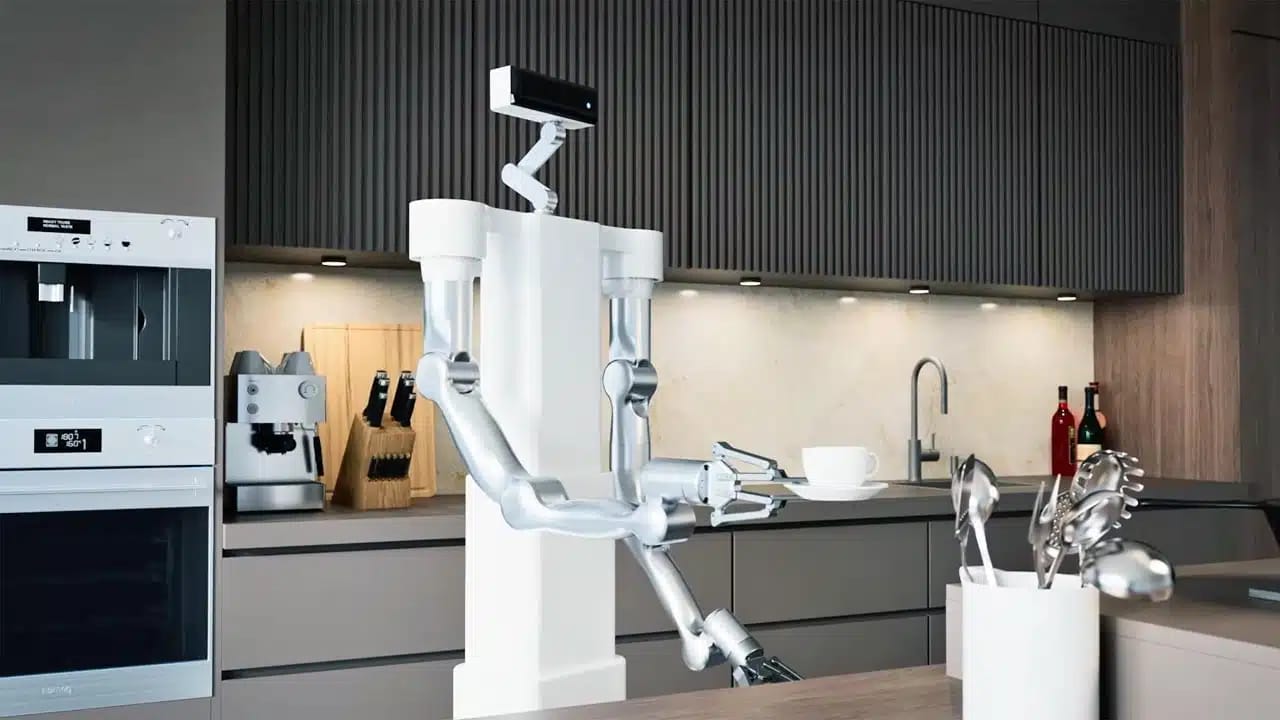
The world of personal robotics is hitting a new milestone with the arrival of Isaac, the robot butler designed by Weave. This innovation promises to radically change how we handle household chores and make the most of our time every day.
Details:
-
Versatility: Isaac can tidy up, fold laundry, organize spaces and much more
-
Intuitive control: voice commands, text, or a dedicated app
-
Privacy: retractable camera and local data storage
-
Pricing: $59,000 upfront or $1,385 a month for 48 months, with a $1,000 deposit
Why I’m telling you about this:
The rise of home robots like Isaac raises fascinating questions about how our relationship with housework and technology is evolving. How will these robotic assistants redefine what comfort and productivity mean at home? What will the social and economic impacts of their large-scale adoption be? As we head toward a future where repetitive tasks could be handed off to machines, it’s crucial to think about how we want to use the time we get back to enrich our lives and our human relationships.
LEARN TO MASTER AI
🎙️ Turn your texts into podcasts with AI
Artificial intelligence is opening up new possibilities to consume content in innovative ways. Two recent tools make it easy to turn text into quality audio content:
-
Google’s Audio Overviews
Google just launched a new feature in NotebookLM called Audio Overviews. It lets you convert notes, PDFs, Google Docs and presentations into AI-generated audio discussions.
To use it:
-
Open an existing notebook
-
Go to the Notebook guide
-
Click the “generate” button on the right
The tool can handle up to 50 sources of 500,000 words each, offering impressive analysis capacity.
Check out my full tutorial on creating a podcast in English in 10 min ⤵️


🎙️ Create Mind-Blowingly Realistic Podcasts with NotebookLM
-
The ElevenLabs mobile app
ElevenLabs offers a free app for iOS and Android that turns any text into high-quality audio in multiple languages.
To use it:
-
Create a free account on the website
-
Download the ElevenLabs app
-
Tap “+” and choose “Import URL” to add the link to the article you want
-
Tap “Listen” to create your audio file
These tools offer new ways to absorb information, especially handy for people who prefer learning by ear. Go ahead and try them to turn your reading into rewarding listening experiences!
WHAT THE RESEARCH SAYS
🧠 AI gets better by re-reading the questions
A recent study reveals that having AI systems “re-read” questions twice, mimicking human behavior, significantly improves their reasoning and problem-solving abilities across a range of domains.
Details:
-
This technique, called RE2 (Re-Reading), boosts AI performance in math, common sense and symbolic reasoning simply by repeating the question before answering it.
-
RE2 works with different AI models and can be combined with other reasoning techniques.
-
The method works best when the question is repeated twice – more repetitions can hurt performance.
-
RE2 even improved AI models that weren’t instruction-tuned, showing broad applicability.
Why I’m telling you about this
This research adds to the many studies showing the potential of mimicking the human thought process to improve AI. The simplicity of this approach suggests that many AI companies may be overlooking basic, human-inspired techniques in their race for the best-performing model. This finding opens up interesting avenues for the future development of AI systems, highlighting the value of drawing inspiration from human cognitive mechanisms.
🤖 Robots that tie their own shoelaces
Google DeepMind just unveiled two new AI systems that push robotic dexterity forward, letting machines perform complex tasks that require precise movements – like tying shoelaces or hanging shirts.
Details:
-
The first system, ALOHA Unleashed, lets robots perform five complex two-armed manipulation tasks, including tying shoelaces, hanging shirts and repairing other robots.
-
The second, DemoStart, uses reinforcement learning to teach robots precise behaviors in simulation, requiring 100 times fewer demonstrations than traditional methods.
-
The systems use diffusion methods similar to image generation models to predict the robot’s actions from random noise.
-
The robots hit a 98% success rate in simulations and up to 97% on real-world tasks like reorienting cubes.
Why I’m telling you about this
Although we’re still far from human-level dexterity, these advances are another step toward building robots that are more useful for everyday tasks. Applying image generation techniques to robotics also shows how breakthroughs in one area of AI can spark progress in others. These developments open up fascinating prospects for the future of robotics and its integration into our daily lives.
THE LATEST TRENDING TOOLS
💡 THE TOOLS:
-
🎬 Video-to-Video for CogVideo turns any video into a new creation, opening up interesting creative possibilities for videographers and editors.
-
📚 Cramify gives students personalized support for studying, tailoring exercises to their specific college courses.
-
📊 Seven24 turns customer feedback into concrete tasks, making it easier to continuously improve products and services based on real data.
-
✍️ Copy AI helps content creators by generating all kinds of copy for different platforms, tailored to each project’s specific needs.
-
🎭 Snap AR Lens Studio levels up AR filter creation with built-in GenAI, enabling more immersive and innovative experiences.
-
✏️ Grammarly positions itself as a versatile writing assistant, offering grammar and spelling corrections across many platforms.
-
🎙️ Otter.ai simplifies meeting note-taking with features like real-time transcription and automatic summary generation.
-
🎨 Amoihub makes it easier to organize and optimize prompts for generative art, helping artists better manage their AI creations.
-
💼 Intuit Assist delivers financial insights powered by generative AI, helping small businesses make decisions.
-
🖼️ Meshy 4 lets you convert text or 2D images into 3D assets, offering new possibilities for visual content creators.
-
💡 Indigo lets you save and run prompts across various apps, streamlining your AI workflow.
IN THE NEWS
-
Roche is expanding its digital pathology open environment by integrating more than 20 AI algorithms from eight new collaborators, strengthening cancer diagnostics and research.
-
Huawei unveils the first tri-fold smartphone, the Mate XT, priced at $2,800, right after the iPhone 16 launch. Well, how about that.
-
Replit introduces its new AI agent that can build complete apps from your ideas, from coding to deployment.
-
AMD is shifting its strategy toward AI chips rather than gaming GPUs, merging its gaming and data center graphics technologies into a single platform called “UDNA“.
-
Hume AI launches EVI 2, a new voice model trained for emotional intelligence, able to understand and generate a variety of vocal tones and styles.
YOUR DAILY CONTENT FIX
1/ 🧠 A nuanced look at the different language models (Claude, ChatGPT, etc.) and their ecosystem
An insightful article that explores the capabilities and limits of LLMs, along with the essential components for getting the most out of them.
Large language models (LLMs) are driving the next big wave of tech innovation, just like the internet, smartphones and the cloud — generative AI is about to…
medium.com/@nizarkehla/les-llm-ne-sont-pas-tout-ce-dont-vous-avez-besoin-0fb1f5034f5f
2/ 🎶 How music creation is evolving in the age of AI
A fascinating video on the impact of AI technologies on the music industry, especially artificial voice generation.

AI Vocals: The Music Revolution Begins
THAT’S ALL FOR TODAY
Thanks for reading the work of our purr-sistent team 😼

💡 To help me improve, develop new ideas or partnerships → [email protected] or @mattioo81
👍️ Enjoying what you’re reading? Subscribe!
📺 If you prefer video content, I invite you to subscribe to my YouTube channel.
– Mathieu