Check out previous editions of the newsletter by clicking here
Hey AI team! Here we go with a new edition of Five Minute AI ⏰
On today’s menu:
-
OpenAI launches its Advanced Voice Mode for more natural interactions
-
Kling levels up video creation with its new Motion Brush tool
-
Kolors Virtual Try-On lets you try on clothes virtually
-
The TxGNN AI opens up new possibilities for treating rare diseases
Ready? Let’s go...
TERM OF THE DAY
Deepfake
A deepfake is an audiovisual manipulation technique that uses artificial intelligence to create hyper-realistic videos or images of people saying or doing things they never actually said or did.
TOP STORY
🎙️ OpenAI rolls out Advanced Voice Mode: a new era for human-machine interaction?
OpenAI is taking conversational AI a step further with the official launch of its Advanced Voice Mode (AVM) for all ChatGPT Plus and Teams subscribers. The update promises to transform the way we talk to AI, making those exchanges more natural and personalized.
Details:
-
Support for Custom Instructions and Memory, enabling tailored conversations and better continuity from one exchange to the next
-
Better understanding of accents and smoother conversations
-
Five new voices inspired by nature: Arbor, Maple, Sol, Spruce and Vale
-
The ability to interrupt the AI mid-answer for a more dynamic interaction
-
Improved support for more than 50 foreign languages
Why it matters ⤵️
This upgrade to Advanced Voice Mode fits into OpenAI’s broader vision of an AI that is everywhere and feels human. As OpenAI CEO Sam Altman has suggested, we’re heading toward a world where interacting with AI every day will be the norm. AVM is a crucial step toward that goal, making those interactions more natural and intuitive.
Down the road, OpenAI is hinting at even more advanced features, like screen sharing and video, promising to push the boundaries of human-machine communication even further.
🎥 Kling gets better with Motion Brush
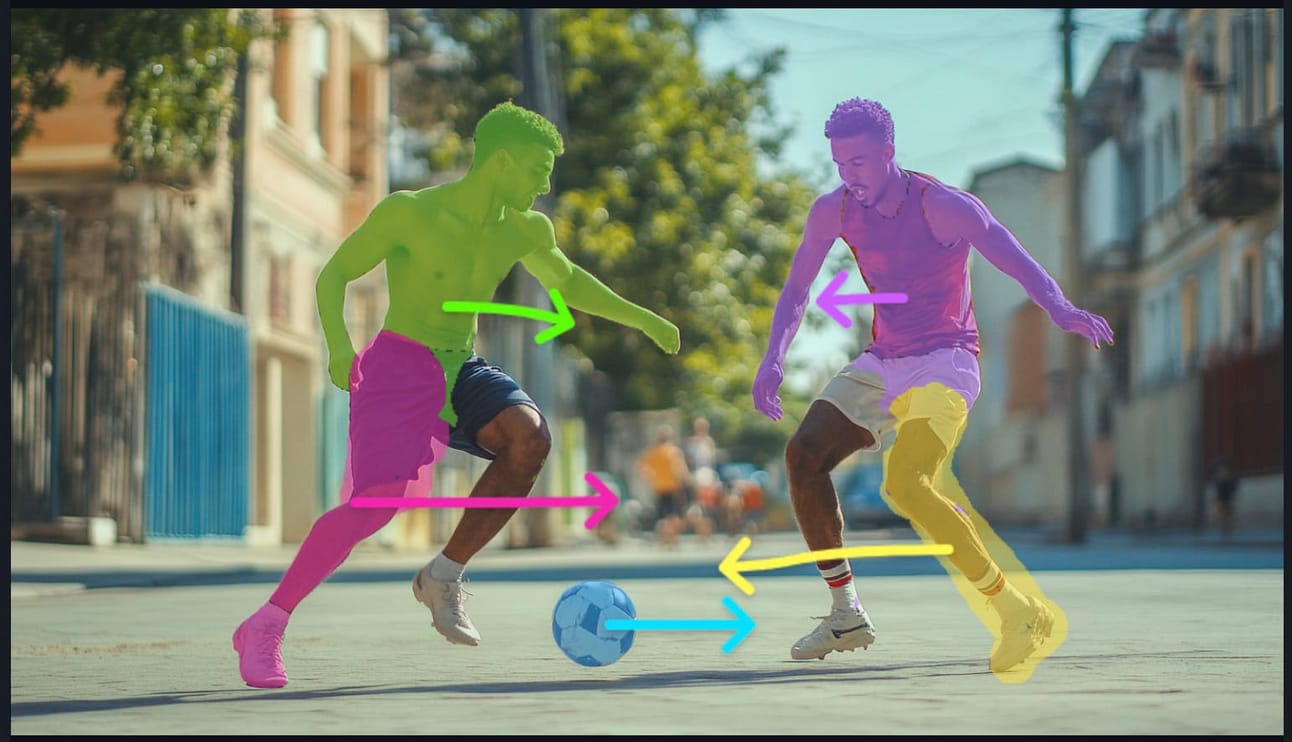
One of the best video generators out there, Kling, hits a new milestone with a feature called Motion Brush. This intuitive tool lets you animate specific elements of an image with a single stroke of the brush.
Details:
-
Select the areas to animate
-
Draw the direction of the movement

With your chosen image, say a soccer player in action, you can adjust the movements independently of everything else in the scene.
Why it matters ⤵️
Kling’s precision, especially with Motion Brush, beats competitors like Runway, delivering more natural and consistent animations.
Check out more details and sample results here.
Join the AI revolution with Five Minute AI! 🚀
Share our passion and earn exclusive rewards.
Click the Share button below, invite your friends to join our community, and unlock unique gifts with every new sign-up!
1️⃣ The Ultimate ChatGPT Handbook, packed with tips only insiders know. This guide will help you boost your productivity and simplify your daily tasks → 🎁 Unlock with 3 friends signed up
2️⃣ Five Minute AI collector’s mug: Featuring our adorable mascot Pixl enjoying his daily read → 🎁 Unlock with 15 friends signed up
Ready to spread AI knowledge? Let’s go! 🌟
LEARN TO MASTER AI
👚 Try on clothes virtually in just a few clicks
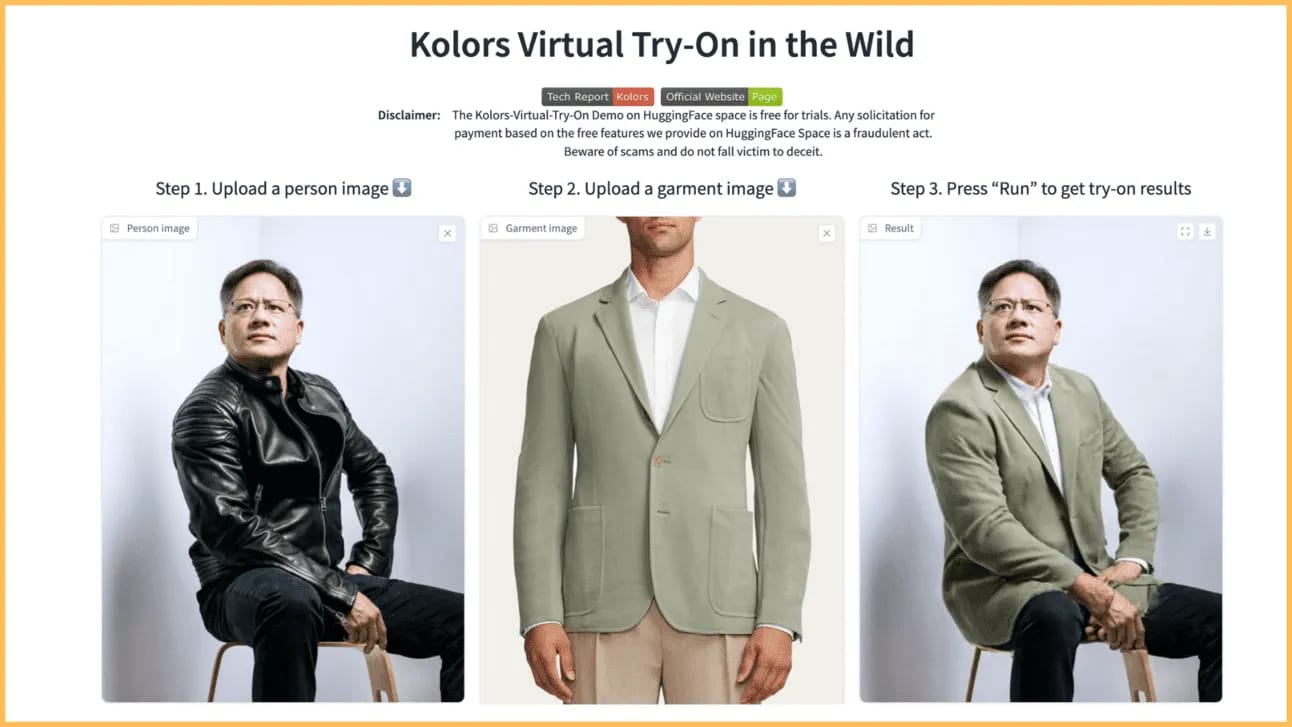
Artificial intelligence is changing the way we interact with fashion. Meet Kolors Virtual Try-On, a free and fun tool available on Hugging Face that lets you swap outfits on any photo.
Here’s how to use it in a few simple steps:
-
Head to the Hugging Face space for “Kolors Virtual Try-On in the Wild”.
-
Upload a full-length photo of the person in the “Person Image” section.
-
Add a clear image of the garment you want in the “Garment Image” section.
-
Click the “Run” button to generate your virtual try-on.
This intuitive process lets you explore different clothing styles without leaving home. For the best results, use sharp, front-facing images of both the person and the garment.
Kolors Virtual Try-On offers an innovative take on online shopping, giving you a realistic preview of how clothes would look on you. Go ahead and try the tool and let your fashion creativity run wild!
WHAT THE RESEARCH SAYS
🧬 AI takes on rare diseases
Researchers at Harvard Medical School have just achieved a major breakthrough in AI applied to medicine. Their AI model, called TxGNN, offers promising hope for treating rare and neglected diseases.
Details:
-
TxGNN identified drug candidates among nearly 8,000 existing drugs for more than 17,000 diseases, many of which currently have no treatment.
-
The model outperforms existing AI tools by nearly 50% at identifying candidates and is 35% more accurate at predicting contraindications.
-
TxGNN’s novel approach lets it extrapolate knowledge from well-understood diseases to less understood ones.
-
The tool is available for free to encourage clinician-scientists to use it.
Why it matters
This innovation is an important step toward improving quality of life for millions of people living with rare diseases. Although years of clinical validation are still needed, TxGNN paves the way for potential treatments for diseases until now considered incurable. It shows the enormous potential of AI in medical research and its positive impact on public health.
🧠 AI memory: more human than you’d think
A fascinating study by researchers in Hong Kong has just revealed that large language models (LLMs) like GPT-4 have a dynamic memory strikingly similar to that of humans. The finding challenges our understanding of AI’s capabilities and could well narrow the gap between artificial and human intelligence.
Details:
-
The researchers redefined memory as the ability to generate responses based on specific inputs, rather than as simple storage of static information.
-
LLMs showed near-perfect memorization of thousands of poems after limited exposure, outperforming humans.
-
The study suggests that the human brain and LLMs work on similar principles of “dynamic fitting”, adapting their responses to stimuli rather than retrieving fixed information.
-
Interesting fact: both humans and LLMs can only “remember” something after being triggered by a specific input.
Why it matters
This research opens up exciting perspectives on the nature of artificial intelligence. If these results hold up, they could transform our understanding of AI. With no fundamental cognitive differences between AI and humans, improving AI’s capabilities could simply become a matter of optimizing hardware and expanding data resources. A promising path for the future of AI!
THE LATEST TRENDING TOOLS
💡 THE TOOLS:
Open Sesame, reveal your wonders”. French gem Sezam has just pulled back the curtain on Nova-2, its latest creation, a revolutionary tool for generating strikingly realistic images. This made-in-France innovation promises to push the limits of visual detail.
That’s not all: the images produced by this tech marvel stand out for their stunning definition, reaching an impressive resolution of 3,000 pixels.
Want to test this wonder yourself? Good news: a free demo is waiting for you on their platform, with a generous gift of 50 free credits as soon as you sign up.
-
💰 FlyCode optimizes revenue recovery for businesses using Stripe through in-depth data analysis, maximizing success rates.
-
📝 Effie offers an intuitive platform for structured note-taking, combining lists, mind maps and writing in a single environment.
-
📱 FlutterFlow makes app development easier by letting users generate code, styles and database schemas with the help of AI.
-
🎥 Kling 1.5 improves dynamic quality and prompt adherence for video generation, delivering more polished results.
-
🌐 HeyGen introduces automatic translation of on-screen text in videos, making it easier to adapt content for international audiences.
-
🔍 Play by Hyperspace lets you generate insights from selected sources on the internet, simplifying research and data synthesis.
-
📚 Docs by Hashnode offers a solution to create and manage technical documentation efficiently, ideal for developers and their teams.
IN THE NEWS
-
Warner Bros. Discovery is adopting Google Cloud’s AI to generate captions, aiming to cut costs and production time for its unscripted shows.
-
Intel launches its Xeon 6 processors and Gaudi 3 AI accelerators, doubling performance for AI workloads and offering better value compared to Nvidia’s H100.
-
OpenAI expands API access to its o1 models, adding tier 4 users at 100 requests per minute and raising tier 5 to 1,000 requests per minute.
-
Suno AI announces a new trimming feature for AI-generated songs, letting Pro and Premier users adjust the start and end of their creations.
-
Apple reveals its plan for a gradual rollout of Siri’s AI updates, with the most significant improvements slated for iOS 18.3, likely launching in January 2025.
-
Before his death, James Earl Jones agreed to let AI recreate his Darth Vader voice, allowing the character to keep appearing in future Star Wars productions.
-
Duolingo introduces AI-powered “Adventures” mini-games and a video call feature to improve language learning through immersive, hands-on experiences.
YOUR DAILY DOSE OF CONTENT
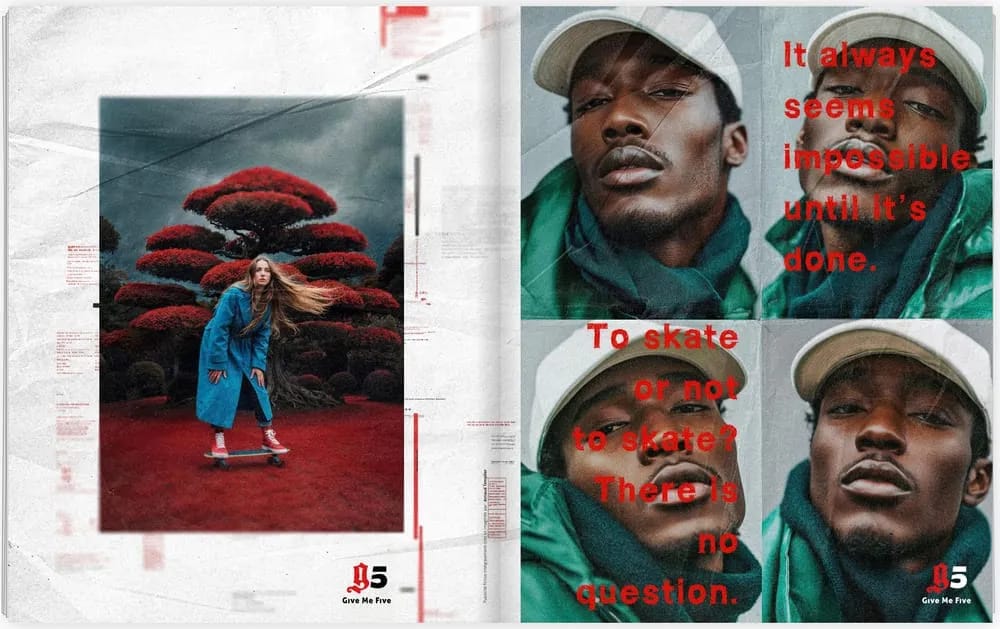
1/ Special issue. French AI magazine “LHC” is putting out an unexpected special issue on skateboarding. Free to read online.
2/ A video for the geekiest among you: how to build the handy cheating calculator with chatgpt


I Made The Ultimate Cheating Device
THAT’S ALL FOR TODAY
Thanks for reading the work of our purr-sistently dedicated team 😼

💡 To help me improve, develop new ideas or partnerships → [email protected] or @mattioo81
👍️ Like what you’re reading? Subscribe!
📺 If you prefer video content, I invite you to subscribe to my YouTube channel.
– Mathieu