Catch up on past editions of the newsletter by clicking here
Hey AI team! We’re back with a new edition of Five Minute AI ⏰
On today’s menu:
-
OpenAI is preparing ultra-specialized AI assistants for professionals, with prices running up to $20,000/month.
-
Meta is testing its first in-house AI training chip to reduce its dependence on Nvidia.
-
Claude 3.7 Sonnet shows off its skills by playing Pokémon Red live on Twitch, with its reasoning on full display.
Ready? Let’s go...
THE BIG STORY
🤖 OpenAI launches premium AI agents to revolutionize professional work

OpenAI is about to shake up the professional landscape with a new generation of ultra-specialized AI assistants aimed at experts and businesses. These advanced agents, built to excel in areas like scientific research, software development and business strategy, will be priced to match their level of expertise.
Details:
-
A tiered offering with three levels of agents: a version for senior executives at $2,000/month, a developer version at $10,000/month, and a PhD-level research agent at $20,000/month capable of generating hypotheses and coding autonomously
-
A massive investment from SoftBank, which has already committed $3 billion to speed up the development of these agents in 2025
-
An ambitious goal for OpenAI, which hopes these agents will account for up to 25% of its revenue in the coming years
-
A confirmation of Sam Altman’s predictions: he announced in January that 2025 would see the first AI agents “join the workforce and materially change the output of companies”
Why I’m telling you about this ⤵️
This OpenAI initiative, reported by TechCrunch, marks a major turning point in how companies may soon approach expertise and specialized skills. With prices comparable to the salaries of seasoned professionals, these AI agents could redefine the very idea of a skilled workforce, while revealing how much organizations are willing to spend for access to automated expertise.
🏗️ Meta is building its own AI chip

Meta is taking another step in its push for technological independence by beginning tests of its first AI training chip designed in-house. The move is part of an effort to reduce its dependence on Nvidia and rein in the growing costs of its artificial intelligence infrastructure.
Details:
-
Manufactured by TSMC, the chip belongs to the MTIA series and specifically targets AI training and inference workloads
-
The test comes after a successful first “tape-out”, a crucial milestone proving the design can be produced at scale
-
Meta already uses in-house chips for the recommendation systems on Facebook and Instagram, and aims to expand their use to generative AI products
-
The company plans a large-scale rollout by 2026, which could save it billions out of the $65 billion earmarked for its AI infrastructure
Why I’m telling you about this ⤵️
With infrastructure costs exploding and AI systems scaling fast, tech giants are investing more and more in their own hardware. Meta now joins OpenAI, Amazon and ByteDance in the quest for independence from Nvidia, currently the undisputed king of AI chips.
🕹️ Claude takes on Pokémon Red live on Twitch

Anthropic is taking its showcase of AI capabilities a step further by launching “Claude Plays Pokémon” on Twitch. The experiment puts the brand-new Claude 3.7 Sonnet model at the controls of the legendary Game Boy game Pokémon Red.
Details:
-
The progress is spectacular: while the previous version of Claude struggled to leave the starting area, 3.7 Sonnet has already beaten three gym leaders in the Kanto region.
-
The livestream interface is especially enlightening: it shows the AI’s internal reasoning alongside its real-time gameplay.
-
Claude’s setup includes a knowledge base to remember important information, a function-calling system to take actions, and vision capabilities to analyze the game environment.
Why I’m telling you about this ⤵️
Watching Claude find its way through the world of Pokémon is a fascinating mix of entertainment and learning. Beyond the fun, this demo offers a glimpse of a future where we might just as easily play alongside AI agents as watch these AIs become popular streamers themselves, entertaining us with their performances and their “thoughts”.
🎁 Share Five Minute AI and Earn Exclusive Rewards! 🚀
Click the Share button below and simply post the link on your social networks to spread the word about Five Minute AI, invite your friends to join our community, and unlock exclusive resources with every new signup!
🎁 1 share → 6 Simple Steps to Perfect Prompts
A simple, effective guide to instantly improve the quality of your interactions with AI.
🎁 3 shares → The Ultimate ChatGPT Handbook
A library of 1,500 tested and optimized prompts to use ChatGPT like a pro.
🎁 6 shares → The 15 Must-Have AI Tools
Practical tools and use cases to bring AI into your work and boost your productivity.
🎁 15 shares → Five Minute AI Collector’s Mug
An exclusive mug featuring our mascot Pixl in Five Minute AI colors, to show off your passion every day.
👉 Click “Share” and start unlocking your rewards!
LEARN TO MASTER AI
💻 Connect your Claude projects to your GitHub repositories

Claude’s GitHub integration opens up a whole new dimension for your development projects. The feature lets the AI assistant access your source code directly, giving you in-depth understanding and tailored support.
Tutorial steps:
-
Create a Claude project called “Code Assistant: [Repository name]” with the description: “Workspace for analyzing and improving the [Repository name] codebase”.
-
From the “Add content” menu, select “GitHub” and authorize the Claude GitHub app when prompted.
-
Choose your repository and select the specific files you need help with.
-
Start asking questions about your code – Claude can explain functions, suggest improvements and even help you debug.
Tip: Use the “Sync now” button to update your project whenever your repository changes, so Claude is always working with the latest version of your code.
WHAT THE RESEARCH SAYS
🧠 Claude 3.7 Sonnet: A hybrid AI model that combines reasoning and speed

Anthropic just launched Claude Sonnet 3.7, billed as the world’s first “hybrid reasoning” model. This innovation cleverly combines a classic LLM with a deeper reasoning model, striking a new balance between instant answers and in-depth thinking capabilities.
What sets Anthropic’s approach apart is its ease of use: no more picking different models for different tasks, because Claude 3.7 Sonnet adapts automatically. That versatility makes it especially effective at programming tasks, an area where Claude had already made a name for itself.
For developers, Anthropic is also offering a new command-line interface that can analyze your code and suggest improvements without you having to specify exactly which files to examine.
Why I’m telling you about this
For anyone building AI agents, this is a big step forward. We can now build agents that handle both simple and complex tasks with a single model, adjusting how deeply they think as needed. That means better-performing agents, improved user experiences and smarter resource allocation, all without complicating the user interface. Claude Sonnet 3.7 is now the best model both for helping you code tools and for integrating into your tools.
THE HOTTEST NEW TOOLS
💡 THE TOOLS:
-
💡 Template Hub offers an innovative marketplace for creating, sharing and deploying specialized AI agents tailored to your exact needs.
-
🤖 Manus AI bills itself as a full-fledged autonomous agent capable of handling concrete real-world tasks without constant human input.
-
🎬 ReframeAnything offers an elegant way to resize any video in a single click, making editing work much simpler.
-
🗣️ Sesame is building a conversational voice model designed for natural, engaging exchanges that crosses the uncanny valley.
-
🦸 Zapier Agents lets you build your own superhuman teammates in minutes, efficiently automating your daily workflows.
IN THE NEWS
-
Luma Labs introduced a new pre-training technique, Inductive Moment Matching, that generates higher-quality images with 10 times the efficiency of current approaches.
-
Sam Altman revealed that OpenAI has trained a new model that excels at creative writing, saying it’s the “first time he’s been truly struck by something written by AI”.
-
Dario Amodei, CEO of Anthropic, predicts that AI will write 90% of the world’s code within the next 3 to 6 months, reaching nearly 100% the following year.
-
Scale AI landed a multimillion-dollar contract from the U.S. Department of Defense for “Thunderforge”, a program deploying AI agents for military planning and operations.
-
ElevenLabs cut the price of its Scribe speech-to-text model in its API by 45%, while offering it for free through its user interface for the coming month.
-
Sudowrite launched Muse, a new AI model trained for fiction writing, with advanced storytelling skills and extended attention for chapter-length output.
YOUR DAILY DOSE OF CONTENT
1/ 🧠 This recent Stanford HAI episode highlights why thinking time matters for avoiding plateaus in AI development

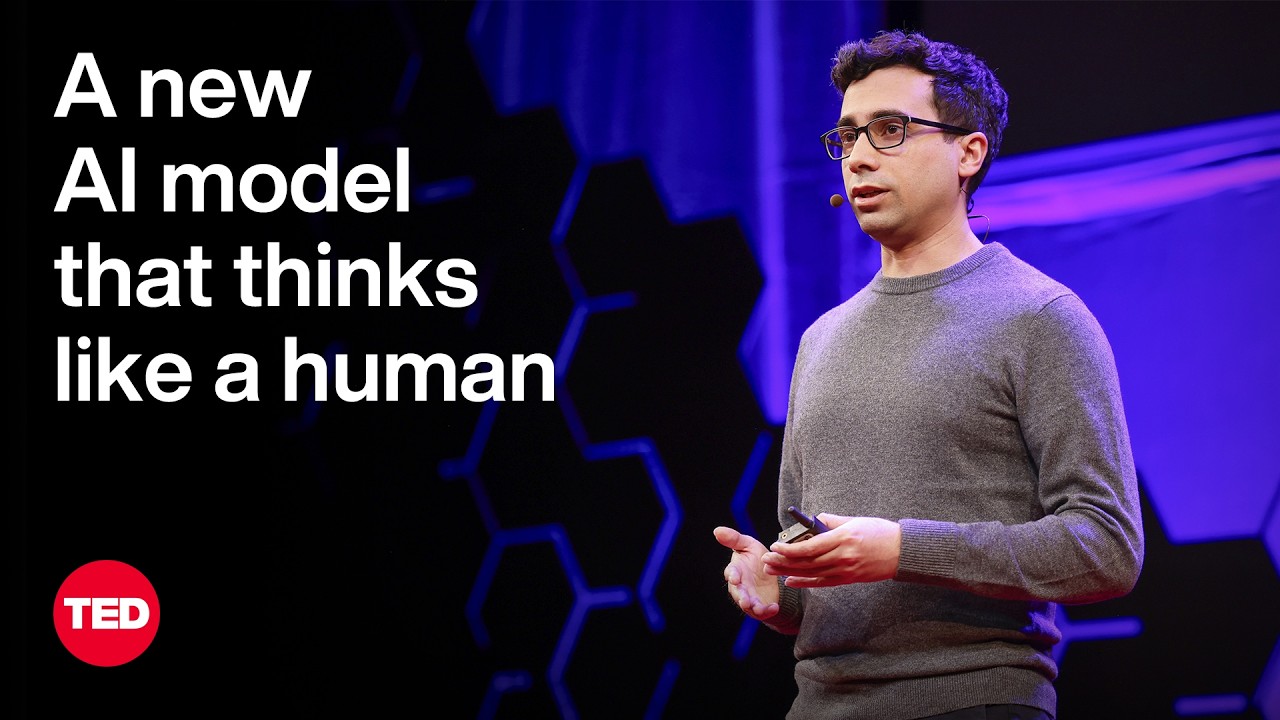
AI Won’t Plateau — if We Give It Time To Think | Noam Brown | TED
2/ 📱 Check out nine practical, real-world uses of Manus AI for your everyday tasks


Manus AI is the closest thing to AGI we’ve seen
This is AI agent that combines Deep Research + Operator + Claude Computer
9 wild examples and use-cases.
1/ Analyzes Tesla stock in just 1 hour, a task that usually takes professional analysts two weeks.

2:00 PM • Mar 9, 2025
811 Likes 116 Retweets
3/ Hello Harry

THAT’S ALL FOR TODAY
Thanks for reading the work of our purr-severing team 😼

💡 Want to contribute, swap ideas or build partnerships → [email protected] or→ @mattioo81
👍️ Like what you’re reading? Subscribe!
📺 If you prefer video content, I invite you to subscribe to my YouTube channel.
– Mathieu