Access previous editions of the newsletter by clicking here
Hey AI team! Here we go with a new edition of Five Minute AI ⏰
On today’s menu:
-
Runway’s new generation brings notable improvements to AI video
-
The legal risks of AI and how to protect your data
-
Amazon’s Nova Act can browse the internet on its own
-
Researchers turn brain signals into speech with just a one-second delay
Ready? Let’s go...
TOP STORY
🎥 Runway Gen-4: an AI video pioneer comes back swinging


Gen-4 by Runway | Runway
AI video generation keeps evolving fast, and Runway, one of the field’s original players, is back in the spotlight with its new model. After Chinese competitors like Kling and the success of Veo 2 had somewhat overshadowed its Gen-3, the company is striking back with an upgraded version.
Runway introduces Gen-4, a model that delivers notable advances in AI video creation. Among the improvements: more realistic physics in motion and better understanding of text prompts. The real innovation lies in consistency of characters, objects and settings maintained throughout the generated sequences, a major challenge in AI video generation.
-
Can produce detailed 5- to 10-second videos in 1080p
-
New “coverage” feature to build complete scenes with consistent placement of elements
-
“GVFX” (Generative Visual Effects) technology that can plug into film production workflows
Why it matters ⤵️
AI video is going through the same lightning-fast progress we saw with generated images. Gen-4 is a step toward the maturity of these tools, gradually turning them from experimental novelties into technologies that can be integrated into professional productions. Entertainment companies are already using it for Amazon productions and even for visuals at Madonna’s concerts. That said, according to several creators, Gen-4 doesn’t yet stand out significantly from its competitors.
🔍 AI and the law: what are the risks for you?
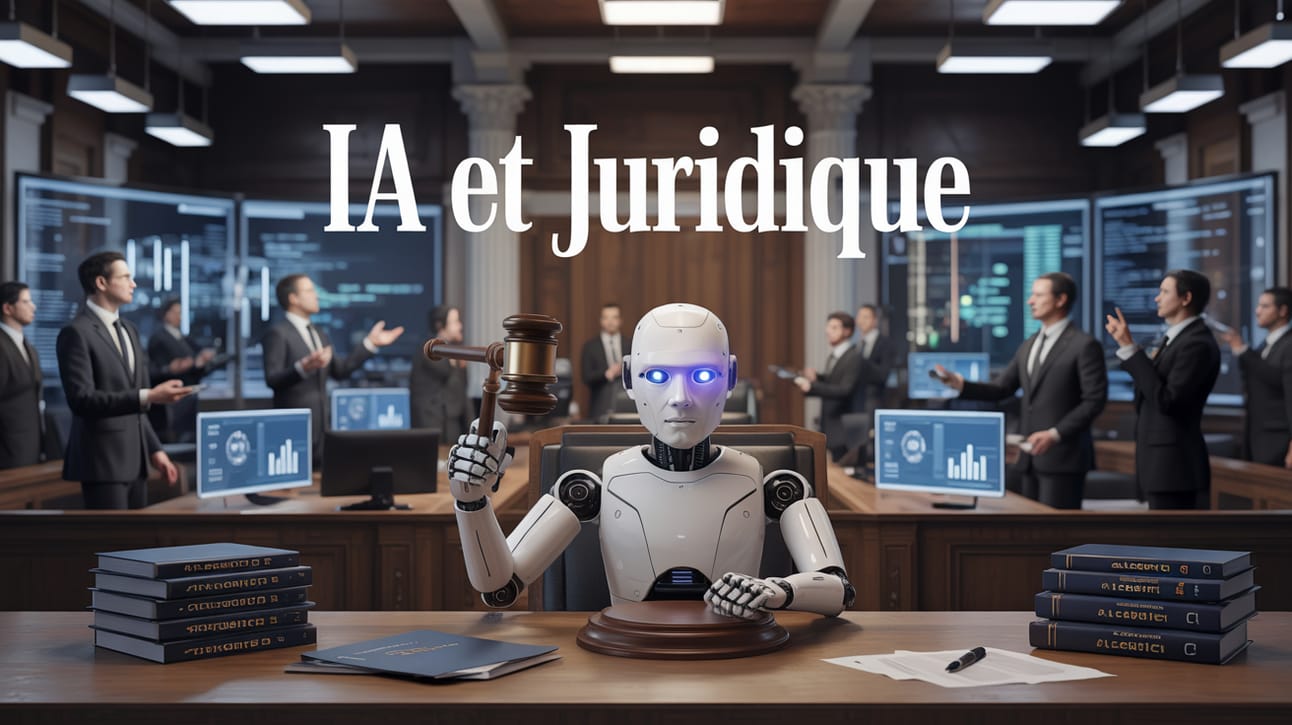
In the world of tech innovation, AI raises brand-new legal questions that affect all of us. Between protecting your personal data, liability when something goes wrong and the risk of algorithmic discrimination, these issues deserve your attention if you want to use these now-everyday tools wisely.
Arnaud Touati, a lawyer specializing in new technologies, explores the legal gray areas that artificial intelligence is creating in our society.
AI is quietly transforming our daily lives, but this revolution comes with considerable legal challenges: the use of our personal data, potentially discriminatory decisions, and who’s responsible when something goes wrong.
Did you know that a simple interaction with a voice assistant can already expose your personal information without you realizing it? Or that an algorithm could unknowingly discriminate against you when you apply for a job?
Let’s break down these issues that affect all of us, whether you use these technologies occasionally or every day.
When you hand your information over to an AI like ChatGPT, imagine that you may be sharing your confidential work with the entire world. As Arnaud puts it: “Never share sensitive data with an AI tool, that’s the basics. Always configure your privacy settings.“
A single work document sent to an AI could be absorbed into its knowledge base and redistributed to other users without you ever being told.
Fortunately, the GDPR protects us by imposing several key obligations on companies:
-
Minimize data collection
-
Obtain explicit consent
-
Guarantee a right of access and deletion
-
Communicate clearly about how your information is used
In case of abuse, the CNIL can step in with fines of up to 4% of offenders’ revenue.
But what happens when an AI causes actual harm? If you follow incorrect medical advice generated by artificial intelligence, who’s responsible?
Arnaud explains: “If an AI is found to be defective and makes a mistake because of the way it was trained, the provider is at fault. But if the user misuses it, by violating the terms of use for example, it can come back on them.“
New European directives now treat AI systems as “products” that can be defective. Be careful, though: these rules won’t fully apply until December 2026.
Algorithmic bias is another major risk. “AIs often reproduce the biases present in historical data. A hiring algorithm can screen out women, banking software can penalize a specific neighborhood,” Arnaud explains.
If you suspect algorithmic discrimination, you have several options:
-
Keep evidence (screenshots, conversations)
-
Ask for explanations about the decision-making process
-
Contact the CNIL or the relevant authority in your country
-
Consider legal action if necessary
Finally, transparency remains the central challenge. Closed models like ChatGPT work like “black boxes” whose decision-making process stays opaque, while open-source solutions generally offer more clarity about how data is handled.
“Users can demand explanations about the data used to train or adjust the AI’s behavior,” Arnaud reminds us.
🌐 Nova Act: Amazon builds an AI assistant that browses the web for you
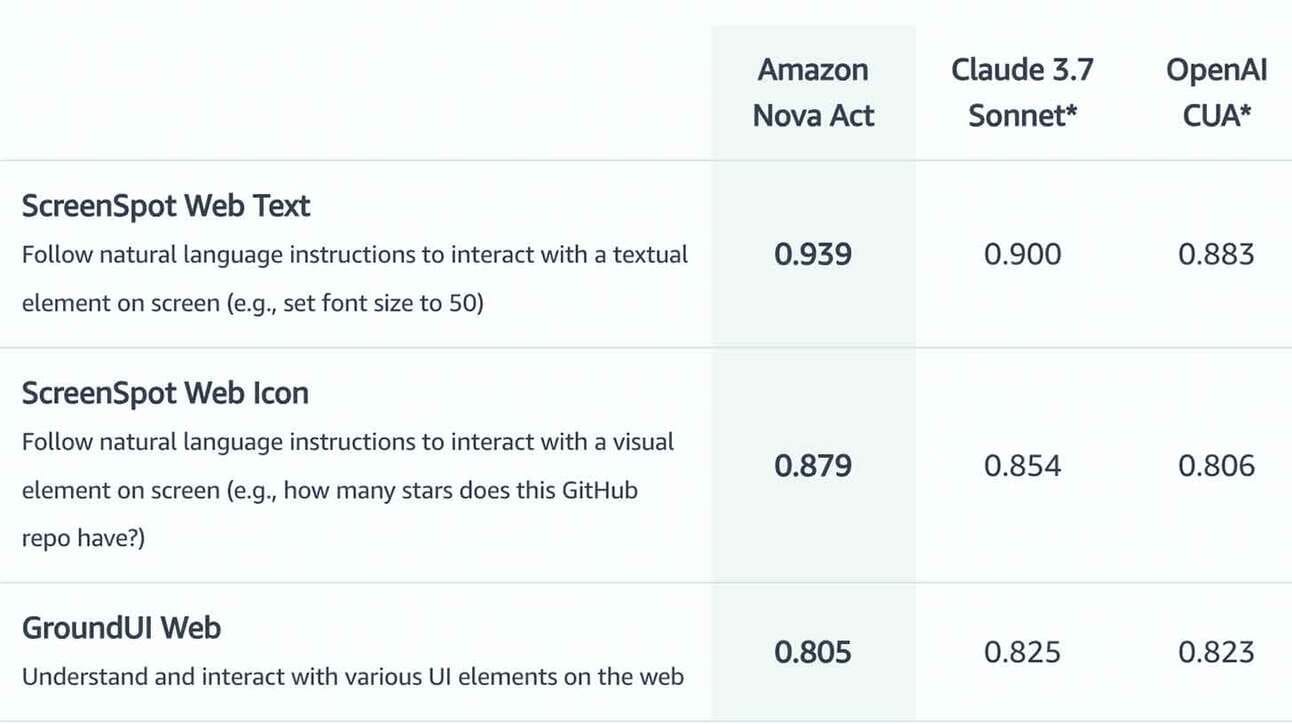
Amazon AGI Labs just unveiled Nova Act, an artificial intelligence system that can browse the internet on its own. Alongside it, a developer SDK has launched, letting you build custom agents to handle complex online tasks.
Details:
-
Nova Act stands out for its ability to adapt to unfamiliar environments, as shown by its performance on online games without any specific prior training.
-
With over 90% accuracy on complex web interactions, the agent beats Claude 3.7 Sonnet and OpenAI’s Computer Use agent at handling forms, calendars and booking systems.
-
Built by Amazon’s AGI Lab team in San Francisco, led by former OpenAI researchers (David Luan and Pieter Abbeel), the technology will soon be integrated into Alexa+, opening the door to automation for millions of users.
-
Currently in research preview, Nova Act is only available to US-based Amazon account holders through its official site.
Why it matters ⤵️
Nova Act marks Amazon’s serious entry into the autonomous AI agent arena, ramping up competition with OpenAI, Anthropic and Google. More than just a tech upgrade, this innovation brings us closer to the line between specialized AI and artificial general intelligence, raising big questions about the future of automating everyday tasks.
🎁 Share Five Minute AI and Earn Exclusive Rewards! 🚀
Click the Share button below and simply post the link on your social media to spread the word about Five Minute AI, invite your friends to join our community and unlock exclusive resources with every new signup!
🎁 1 share → 6 Simple Steps to Perfect Prompts
A simple, effective guide to instantly improve the quality of your interactions with AI.
🎁 3 shares → The Ultimate ChatGPT Handbook
A library of 1,500 tested and optimized prompts to use ChatGPT like an expert.
🎁 6 shares → The 15 Must-Have AI Tools
Practical tools and use cases to bring AI into your work and boost your productivity.
🎁 15 shares → Five Minute AI Collector Mug
An exclusive mug featuring our mascot Pixl in Five Minute AI colors, to show off your passion every day.
👉 Click “Share” and start unlocking your rewards!
LEARN TO MASTER AI
🔍 Visualize your knowledge with mind maps
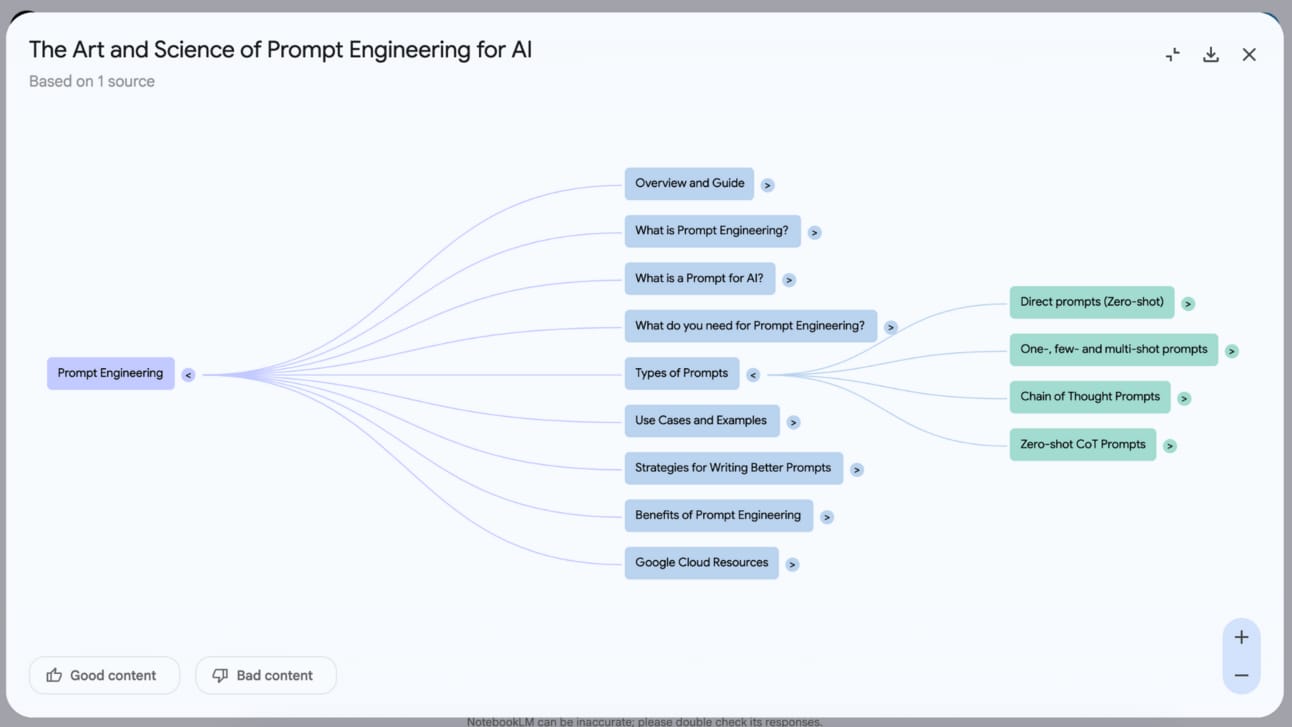
NotebookLM now offers a mind map feature that turns your documents into interactive visual networks. This approach makes it much easier to explore the connections between different concepts and makes learning complex topics more accessible.
-
Go to NotebookLM and create a new notebook.
-
Import a variety of sources (PDFs, Google Docs, websites, YouTube videos) to build a rich knowledge base.
-
Interact with your content through the AI chat to help the AI understand what you’re interested in.
-
Generate interactive mind maps by clicking the dedicated icon, then explore any node to ask questions about specific concepts.
Tip: Click between different nodes of your mind map to discover unexpected connections between concepts and start focused discussions about how ideas relate.
WHAT THE RESEARCH SAYS
🧠 AI turns brain signals into instant speech
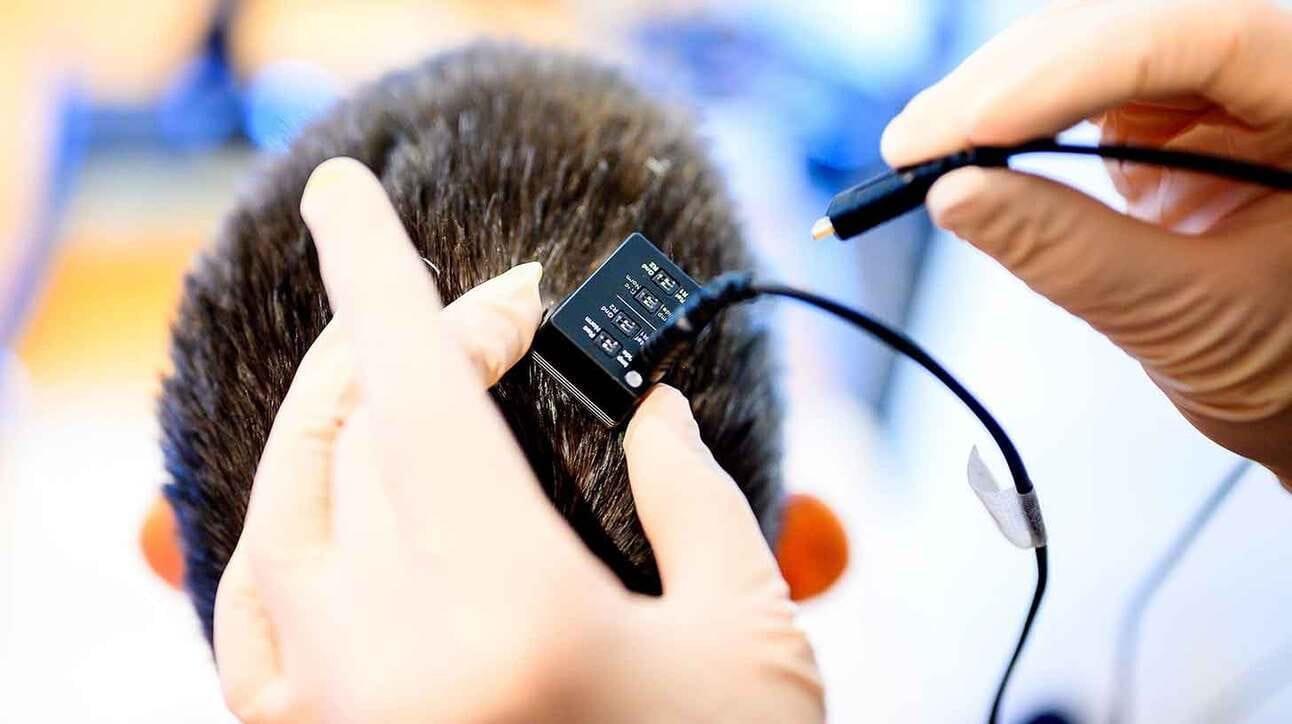
Researchers at UC Berkeley and UCSF have made a major breakthrough in brain-computer interfaces by developing technology that turns brain signals into speech with just a one-second delay, a huge improvement over previous systems.
Details:
-
The system decodes signals from the brain’s motor cortex, converting intended speech into words almost instantly, compared with an 8-second delay for earlier systems.
-
The AI model can generate speech using the patient’s pre-injury voice recordings, producing a more personalized and natural result.
-
The technology successfully handles words that weren’t in its training data, showing it learned the fundamental patterns of speech rather than simply memorizing responses.
-
The approach works with various brain-sensing methods, demonstrating its versatility beyond any single hardware approach.
Why it matters
A whole new world is opening up for patients who have lost the ability to speak due to conditions like ALS, strokes or severe paralysis. By solving the latency problem, this technology could dramatically improve quality of life and bring normalcy back to communication for these patients, restoring speech in a way once thought impossible.
THE HOTTEST NEW TOOLS
-
🌐 Skyvern 2.0 makes web task automation easier by combining computer vision and language models for better productivity.
-
🖼️ Kosmik offers an AI browser for visual research with an infinite canvas to organize your files, especially well suited to students and creatives.
-
🎭 Hume Octave lets you create emotionally intelligent AI voices that can understand and express different shades of emotion.
-
👨🏻⚖️ Harvey provides specialized AI solutions for law firms, service providers and Fortune 500 companies.
-
🤖 Ernie X1 & 4.5 are Baidu’s new natively multimodal models, designed for deep reasoning and a wide range of applications.
IN THE NEWS
-
A study finds that AI-generated meme captions are, on average, rated funnier than those written by humans.
-
Five quick tips to optimize your use of AI and get better results every day.
-
Hollywood calls on Trump to protect the creative industries from AI, with more than 400 film industry professionals signing an open letter defending their copyrights against unauthorized exploitation by companies like OpenAI and Google.
-
Humanoid robots can now build other robots, marking a significant step forward in the autonomy of robotic systems.
-
Luma Labs unveiled a new “Video to Audio” feature in Dream Machine, letting users easily generate soundtracks perfectly synced with their videos.
-
Amazon is developing Nova, an advanced reasoning AI model slated for June that will use a “hybrid” approach combining quick answers and deep analysis to compete directly with models from OpenAI and Anthropic.
YOUR DAILY DOSE OF CONTENT
1/ 🛍️ H&M is creating digital twins of 30 models for its ads, allowing them to rent out their virtual doubles to other brands.

2/ 🚲 Humanoid robots hit a new milestone: they can now ride a bike with ease.


Significant progress in AI and robotics this week.
Just this only this, a humanoid rides a bike, nothing else matters now

6:20 AM • Mar 14, 2025
597 Likes 128 Retweets
3/ 🚚 A glimpse of our future, with plenty of trucks like these that will soon be a common sight.

Another truckload of humanoid robots heading out; it’s moving day to Figure’s new HQ campus!

5:11 PM • Mar 8, 2025
6.33K Likes 569 Retweets

THAT’S ALL FOR TODAY
Thanks for reading the work of our purr-sistent team 😼

💡 Want to contribute, swap ideas or build partnerships → [email protected] or→ @mattioo81
👍️ Like what you’re reading? Subscribe!
📺 If you prefer video content, I invite you to subscribe to my YouTube channel.
– Mathieu