Access previous editions of the newsletter by clicking here
Hey AI team! I hope you had a merry Christmas surrounded by your loved ones. The news may be slowing down as 2024 wraps up, but I’m still at my post to bring you the must-know stories. Here we go with a new edition of Five Minute AI ⏰
On today’s menu:
-
Check out the latest AI breakthroughs and projects unveiled by Google. 2025 is shaping up to be exciting!
-
OpenAI’s O3 model family sets new standards for artificial reasoning.
-
CHIEF, the AI developed by Harvard, is transforming cancer detection with a remarkable 96% accuracy.
-
Google Cloud shares its predictions on AI’s impact on the business world for 2025.
Ready? Let’s go...
TODAY’S DEFINITION
MidJourney
Midjourney is an AI image generator available through Discord or on its website that lets you create original illustrations from text descriptions (prompts). It’s known for its especially artistic and aesthetic output.
THE TOP STORY
Gemini 2.0, Project Astra, Jules: Google’s latest AI innovations
Google just keeps innovating, and there’s a lot to unpack here. I’ll start with the features already available to everyone, then wrap up with the ones still reserved for a handful of hand-picked users.
Gemini 2.0 Flash Experimental (available now)
The Gemini 2.0 Flash Experimental model is the first in the new 2.0 series that you can try today. And honestly, it’s a big step forward.
This model beats all of Google’s older 1.5 models, both on benchmark performance and on speed (2x faster), while being significantly more compact. That shows Google has made fundamental progress on efficiency, not just raw power.
The big new feature is Streaming Mode, an almost magical experience: the AI can see your screen and talk with you in real time, by voice. And the most impressive part? All of Gemini 2.0, Streaming Mode included, is completely free to try in Google AI Studio and through the Gemini API. Professional-grade technology like this, available for free, is a real revolution.
Deep Research agents (available now)
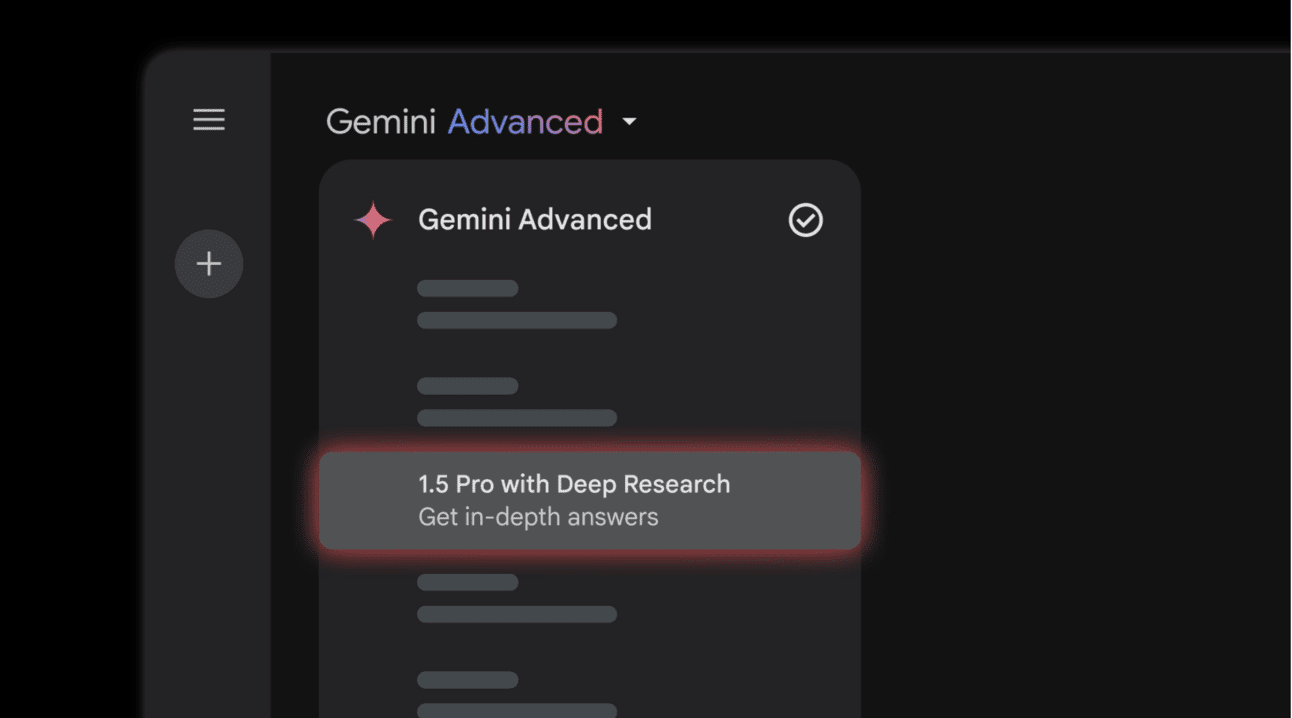
Google is also offering a mind-blowing feature: Deep Research. Built into Gemini Advanced, it turns the AI into an incredibly thorough research assistant.
In practice, the agent builds a multi-step research plan for you to approve, then explores the web methodically, running several rounds of searching and analysis. Picture Perplexity, but taken much further.
In the end, you get a structured report, complete with citations and sources, ready to export to Google Docs. The only catch: this feature is reserved for (paying) Gemini Advanced subscribers. If research is part of your daily routine, it’s clearly worth the investment.
Project Mariner (trusted testers only)
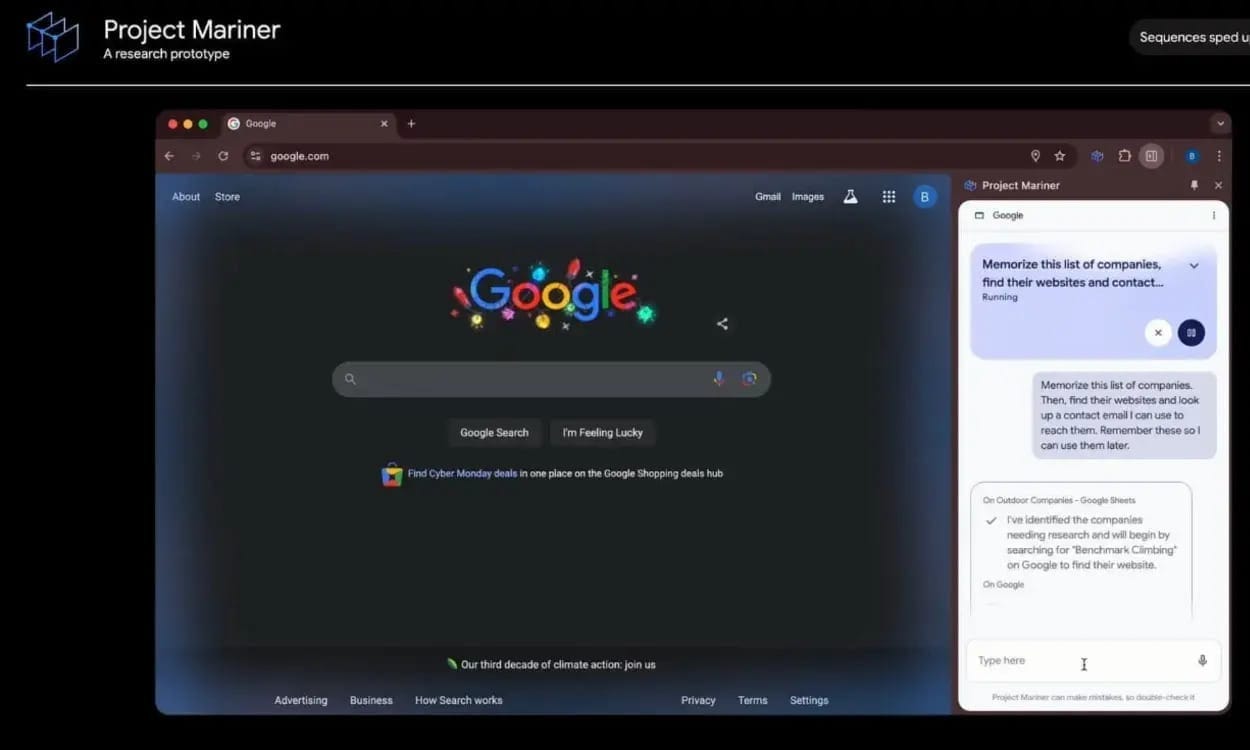
Project Mariner is Google’s prototype AI agent for browsers. Currently being tested through an experimental Chrome extension, it’s their first real attempt at getting an AI to interact with web interfaces.
The AI can browse websites, click, fill out forms and carry out multi-step tasks just like a human. For safety reasons, it only works in the active tab and asks for your confirmation before any sensitive action. So you can’t run 20 agents in parallel, but the idea of offloading tedious browsing chores is promising.
For now, it’s limited to hand-picked testers, but this kind of technology paves the way for a future where AI handles repetitive web tasks for us.
Jules coding agents (trusted testers only)
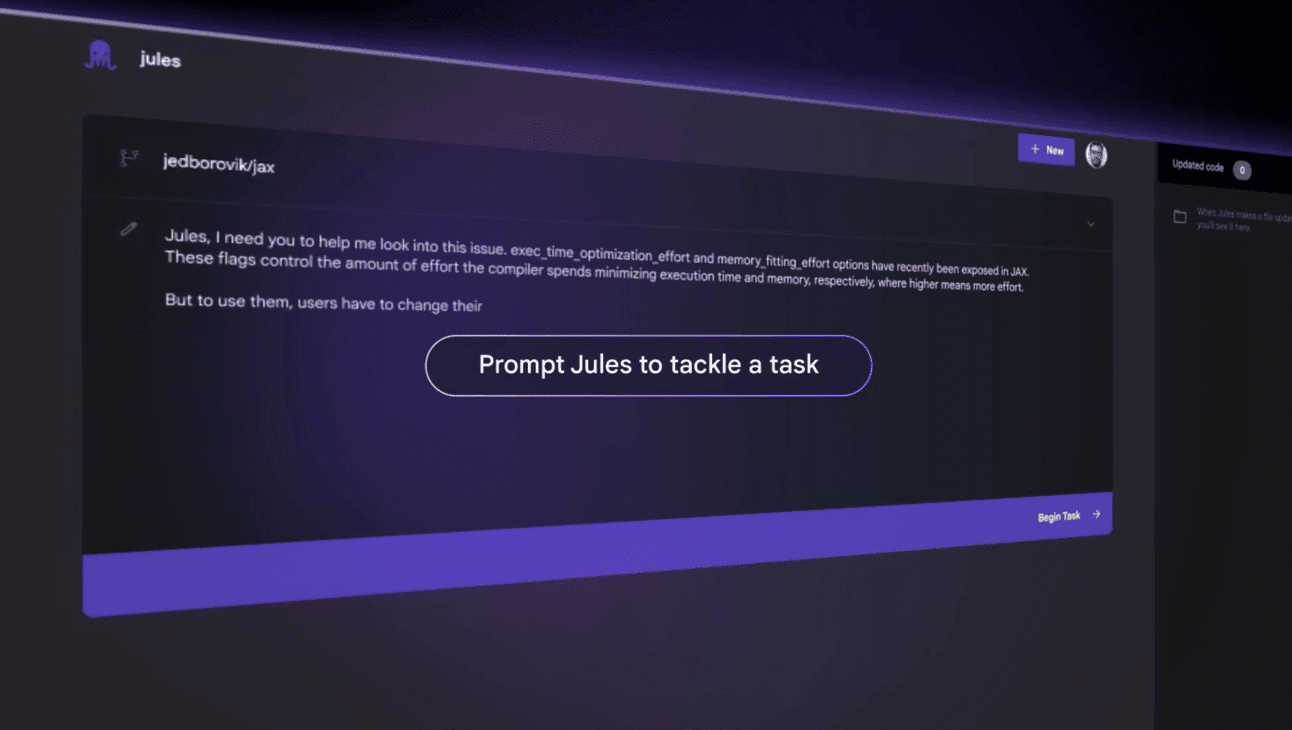
Jules is Google’s new experimental coding agent, integrated directly into GitHub. More than just a code generator, Jules thinks like a developer.
It can plan complex tasks, edit multiple files and prepare pull requests to fix bugs right in GitHub. Even better, it works asynchronously: you assign it tasks, and while it gets them done, you can keep working on your own stuff.
Still limited to a few testers, Jules should open up to more developers in early 2025. One to watch closely!
Project Astra (trusted testers only)
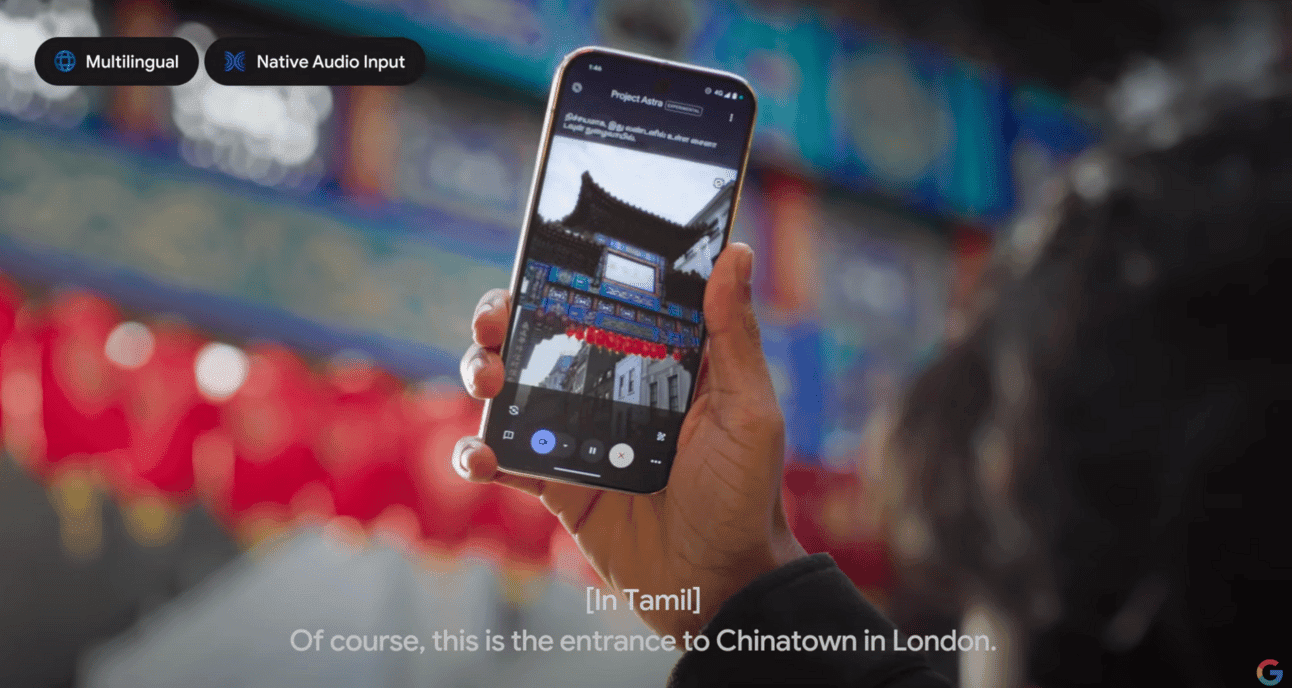
Finally, Project Astra, Google’s universal assistant, is evolving fast. Still in testing, this assistant aims to see the world in real time right alongside you.
What’s new? Even deeper integration with the Google ecosystem: it uses Search, Lens and Maps as tools to get its tasks done. That lets it interpret and act on information from multiple sources.
Another new feature is its memory: up to 10 minutes of active memory within a session, plus recall of past conversations for more personalization. Trials already include prototype glasses, and I can’t wait to see where this takes us.
The message is clear: Google is no longer betting solely on the raw power of its models, but on how practically they fit into our everyday lives. Whether it’s automating our web tasks, helping with our development work or supporting our research, these tools all aim to boost our productivity while staying accessible.
2025 is shaping up to be a pivotal year, when some of these experimental technologies will go mainstream. I can’t even imagine all the possibilities of having an assistant that automatically handles tasks in our Chrome browser for us with Project Mariner. Either way, I can’t wait to test it!
🤖 OpenAI’s new O3 models: A major leap in artificial reasoning


OpenAI o3 and o3-mini—12 Days of OpenAI: Day 12
The grand finale of the “12 Days of OpenAI” had a big surprise in store with the launch of the O3 model family. This new generation, made up of O3 and O3-mini, pushes the limits of machine reasoning with remarkable performance.
Details:
-
Exceptional performance:
-
Programming: ELO score of 2727 on Codeforces (+800 points vs O1)
-
Math: 96.7% on AIME and 25.2% on Frontier Math
-
Scientific reasoning: 87.7% on GPQA Diamond (better than experts)
-
Conceptual understanding: 87.5% on ARC-AGI (beating the human average)
-
-
O3-mini, the optimized version:
-
Focused on programming tasks
-
Adjustable reasoning level (low/medium/high)
-
Expected availability: January 2025
-
Why I’m telling you about this ⤵️
This breakthrough marks an important milestone in AI’s evolution, even if we’re still far from AGI. O3’s performance sets new standards in the field, while keeping in mind that these models still have some fundamental limitations.
For the full picture, check out the recap of the 12 days of announcements that capped off OpenAI’s year.
Join the AI revolution with Five Minute AI! 🚀
Share our passion and earn exclusive rewards.
Click the Share button below, invite your friends to join our community, and unlock unique gifts with every new sign-up!
1️⃣ The Ultimate ChatGPT Handbook, with tips only insiders know. This guide will help you boost your productivity and simplify your daily tasks → 🎁 Unlock with 3 friends signed up
2️⃣ Collector’s Five Minute AI mug: Featuring our adorable mascot Pixl enjoying its daily read → 🎁 Unlock with 15 friends signed up
Ready to spread AI knowledge? Let’s go! 🌟
LEARN TO MASTER AI
🎙️ Build a voice conversational agent for your website
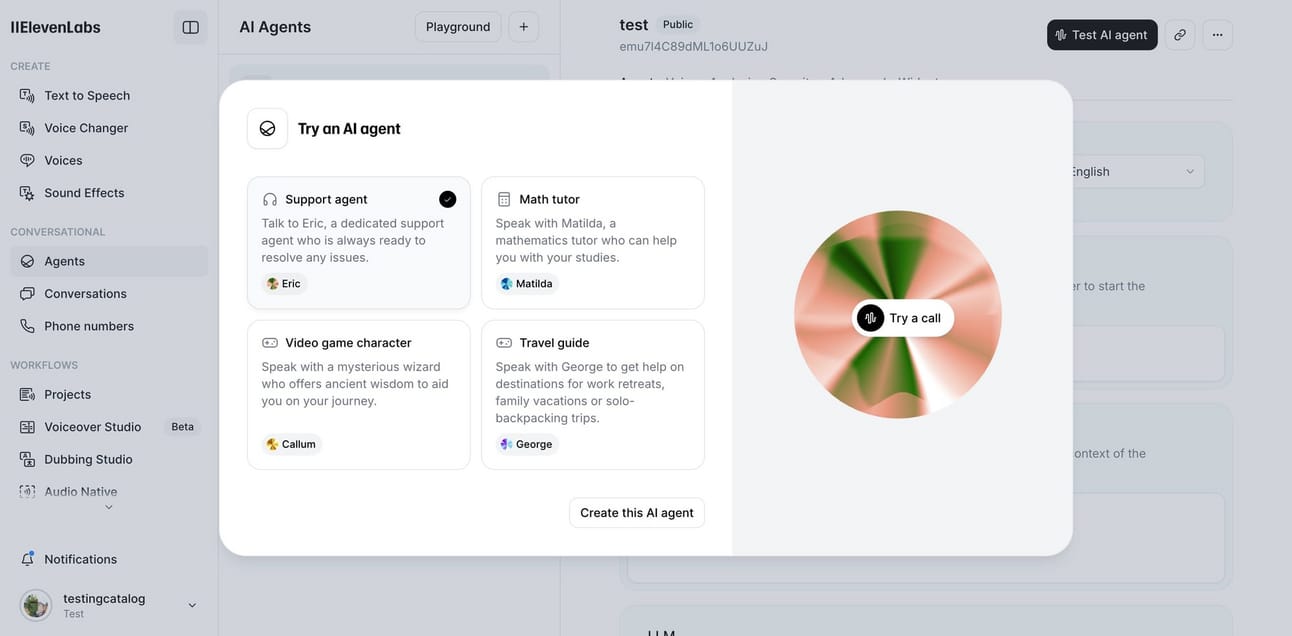
Find out how ElevenLabs is transforming the customer experience with its new AI conversational agents feature. This innovative solution lets you add a smart voice assistant that can talk naturally with your visitors.
Steps to set up this conversational agent:
-
Create your account: Head to ElevenLabs and create your account to access the Agents section
-
Configure the agent: Define your agent’s personality and write its welcome message
-
Pick a voice: Choose an existing voice or create a custom voice for more authentic interactions
-
Customize the look: Adapt the widget’s appearance to your brand guidelines
-
Integrate: Embed the widget code on your website
💡 Pro tip: Before deploying your agent, use the “Test AI agent” button to check that its answers are consistent and aligned with your brand identity. This step is crucial to guarantee an optimal user experience.
WHAT THE RESEARCH SAYS
🔬 CHIEF: Harvard’s AI that detects cancer with remarkable accuracy
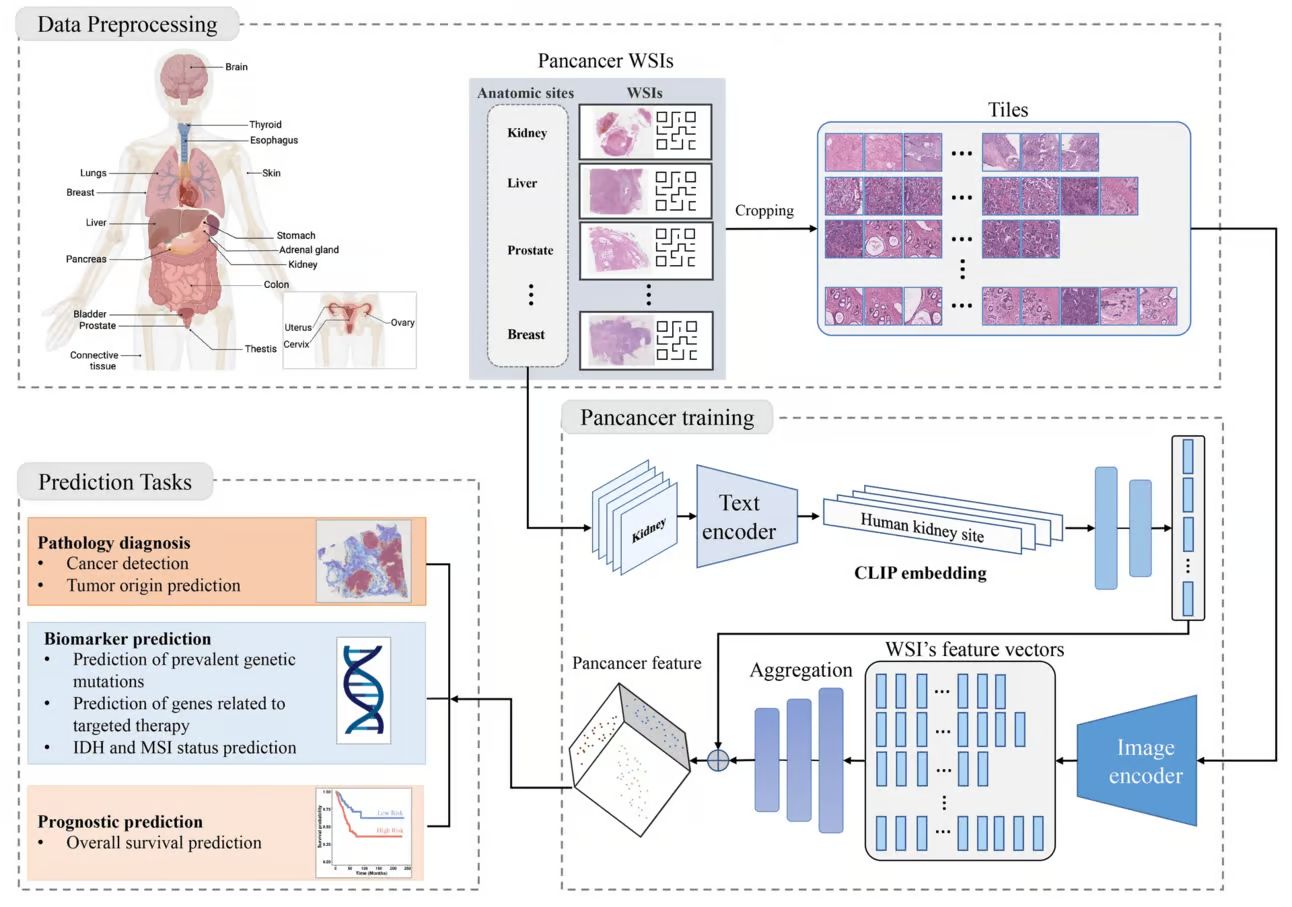
Details:
-
A new AI model called CHIEF (Clinical Histopathology Imaging Evaluation Foundation) has just been developed by Harvard Medical School
-
Trained on 44 terabytes of data, including 15 million unlabeled images and 60,000 tissue images
-
Able to detect 19 different types of cancer with 96% accuracy
-
Outperforms existing systems by 36.1% in analyzing cancerous tissue
-
The model is open source and available on Github for researchers
Why I’m telling you about this:
This breakthrough is a significant step forward in early detection of cancer. Comparable to ChatGPT in its versatility, CHIEF stands out for its specialization in medical image analysis. Its innovative approach not only detects tumors with high accuracy, but also assesses how aggressive the cancer is and predicts how it will respond to treatment. It’s a promising tool to help healthcare professionals make faster, better-informed decisions, potentially crucial for saving lives.
THE LATEST TRENDING TOOLS
💡 THE TOOLS:
-
📸 Google Imagen 3 reaches a new milestone in AI image generation with exceptional quality and stunningly rendered details.
-
🎨 Google Whisk takes a fresh approach that lets you create custom visuals by drawing on existing images to define the subject, scene and style.
-
☎️ NewOaks AI Phone Agent transforms call handling with a virtual phone agent that can interact naturally in real time.
-
🧠 Findr positions itself as your digital second brain, offering unlimited memory powered by AI.
-
📫 MagicMail makes it easy to create professional emails by turning your text instructions into styled HTML messages ready to send.
-
📈 Betterwatchlist revolutionizes stock tracking with AI-powered real-time analysis of price movements.
-
🎅 AI Santa by Tavus lets kids around the world video chat with Santa Claus in 30 different languages for 5 minutes.
IN THE NEWS
-
Midjourney unveils its new Moodboards feature, which lets users create their own image generation styles by uploading a selection of reference visuals.
-
Meta upgrades its Ray-Ban smart glasses with new features like real-time translation, an AI assistant and music identification via Shazam.
-
xAI rolls out an optimized version of Grok-2 on X, offering triple the speed, better multilingual support and built-in web search.
-
Stanford researchers launch an ambitious project to build an AI-powered virtual human cell to revolutionize biological research.
-
[DeepLearning.AI offers](https://www.deeplearning.ai/short-course
YOUR DAILY DOSE OF CONTENT
-
🔓 A simple but powerful algorithm for testing AI’s limits
Best-of-N (BoN) is a new approach for evaluating how robust today’s AI systems are across different modalities.
https://jplhughes.github.io/bon-jailbreaking -
🚀 Google’s predictions for AI in business
A forward-looking analysis laying out the 5 biggest transformations artificial intelligence will bring to the business world by 2025.
https://blog.google/products/google-cloud/ai-trends-business-2025/
THAT’S ALL FOR TODAY
Thanks for reading the work of our purr-sistent team 😼

💡 To help me improve, or to pitch new ideas or partnerships → [email protected] or @mattioo81
👍️ Like what you’re reading? Subscribe!
📺 If you prefer video content, I invite you to subscribe to my YouTube channel.
– Mathieu